John just started a new reef tank, and after researching the various steps he should take on his new tank he is ready for his first coral. He excitedly orders a few frags from a major online vendor including Zoas, LPS and SPS.
After receiving the frags, placing them in his tank and allow the polyps to open… disappointment sets in. Why do the frags look nothing like the pictures on the vendor websites?
I think most of us have experienced this scenario above at some point in the hobby. What exactly is going on, what is the issue? Is this a case of photo manipulation, incorrect expectations, tank parameters, lighting setup or configuration? This will be an ongoing topic of this site and the coral database as I explore the disconnect, how to best purchase corals, and how to spot photographic issues on various vendor sites.
Lighting and Photography
The most obvious explanation for many variances in appearance is lighting. Anyone who has kept coral knows that running heavy actinic lighting (very blue) results in fluorescence of corals and a very different look. This fluorescence is a natural phenomenon that some speculate to be a result of natural selection as coral evolved to improve plankton attraction for food collection (Ben-Zvi et al. 2).
The visible light spectrum starts at the purple end around 400 nanometers, through blue, green, yellow and finally red with a wavelength around 700 nanometers. A behavior of light in water is longer wavelengths are more readily absorbed, meaning that starting at the infra-red/red end of spectrum light is quickly absorbed by the water in the form of heat, etc. By time you get even a few feet down, the amount of light reaching coral and fish starts to move further towards the blue, violet and ultra-violet end of the spectrum.
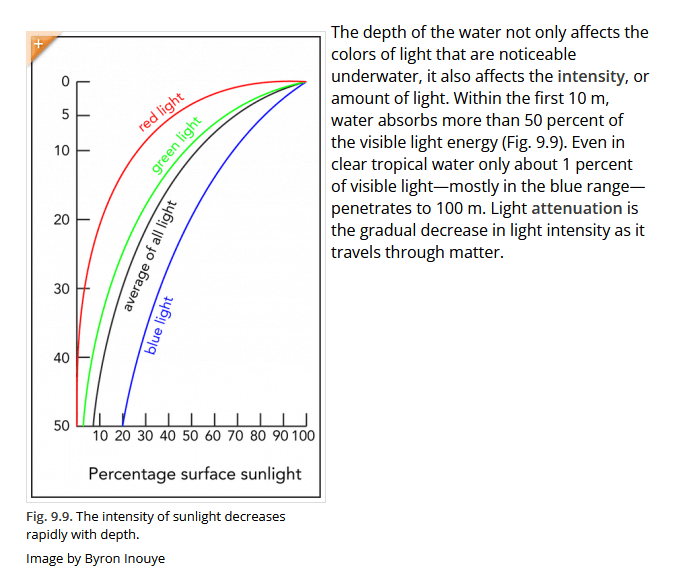
Image credit: (Exploring our Fluid Earth)
This may explain why coral has evolved over time to use this blue end of the spectrum to fluoresce for feeding, and why as hobbyists we see such as unique appearance of coral when exposed to this deep blue and violet light. This is both what the coral has grown to use, and all that is typically available for it (unless it is a very shallow species). So why does this matter to us when it comes to coral appearance? A coral seen in white light/full spectrum will look very different from one that is shown in only blue/violet with ultraviolet added in. And this has been a trend in the hobby, with more and more aquarium keepers deciding that a heavy blue (some would say “windex”) look is preferable as this brings out the fluorescence in many coral varieties.
Coral vendors thus responding to the trends, and attempting to make their “product” more appealing by showing off radiated colors through florescence, take pictures under this heavy blue lighting. There are a few issues with this though:
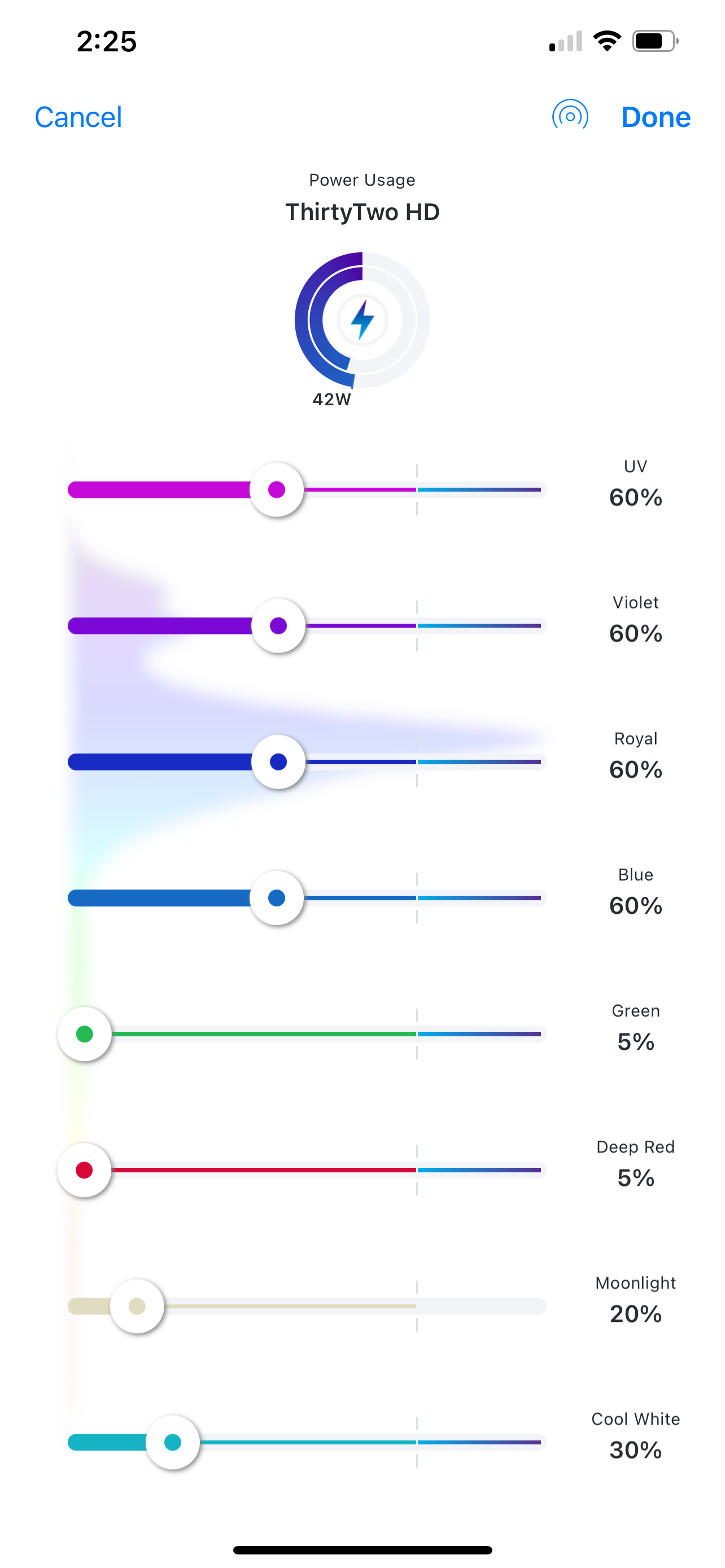
- Not all “blue light” is created equal. Many reef lighting systems today allow for customization of your spectrum output. For example, the AI lights I use, allow through sliders the adjustment of intensity on its various color LED’s (example of sliders below). Hobbyists can share these lighting profiles, but most vendors do not state what each photo was taken under.
- If you have never tried, attempt to take a photo of your coral in a heavy blue lit system. Most of the time this will result in a poor photo that looks nothing like what we see with our eyes in the same lighting. You can attempt to overcome this issue through the use of filters and/or post-processing through tools such as Photoshop. Yet anytime you start to edit photos, it becomes as much art as science. And what one vendor may end up with is different than another even with the same equipment in use. Furthermore, what is the goal of the editor? To “highlight” the coral appearance through saturation and vibrance? Or to mimic as close to their perceived reality what they see in the tank?
Lets take a few examples. In this first photo, no edits have been made. This was captured in RAW with:
Camera: Canon 70d
Lens: Canon EF 24-70mm f/2.8L II USM
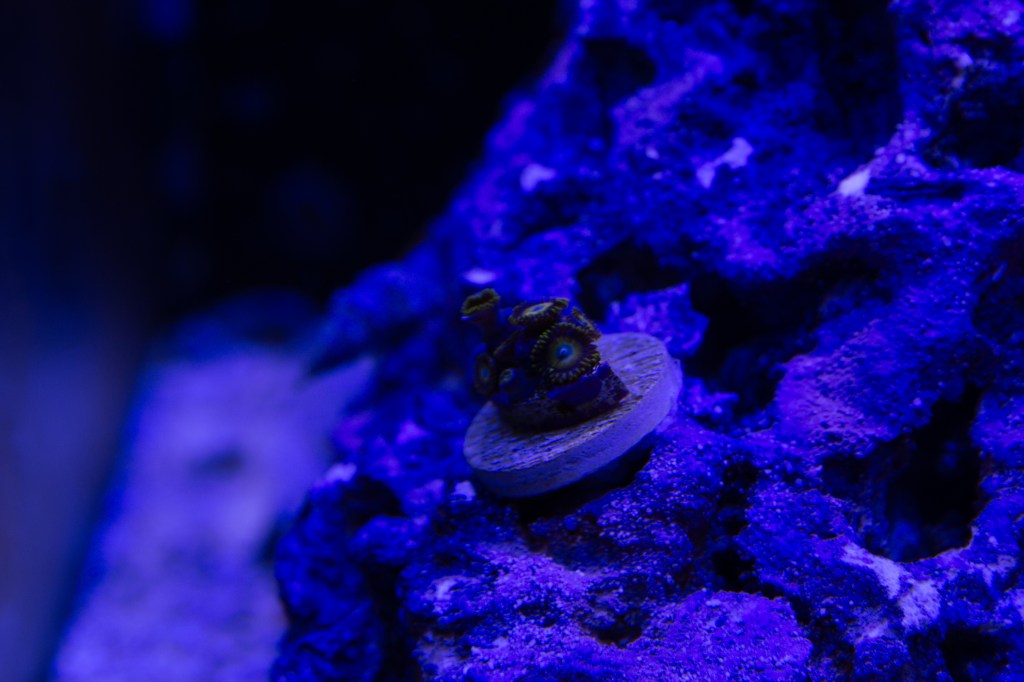
This is in my RedSea Max E-170 tank with RedSea ReefLED 90 lighting, set to 80% blue, 75% white.
Next a photo that has been edited to look as close to what my eyes see when I look at this zoanthid.

This was done in Lightroom Classic, using these edits in the basic module:
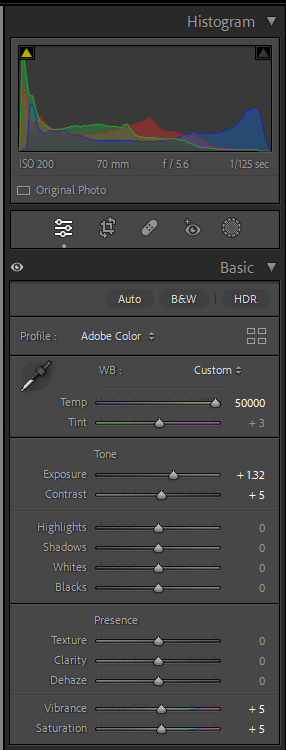
It is easy to see how this photo then could end up so differently between vendors, across lighting setups and camera equipment. Lets take a look at slightly more saturation and a closer crop.
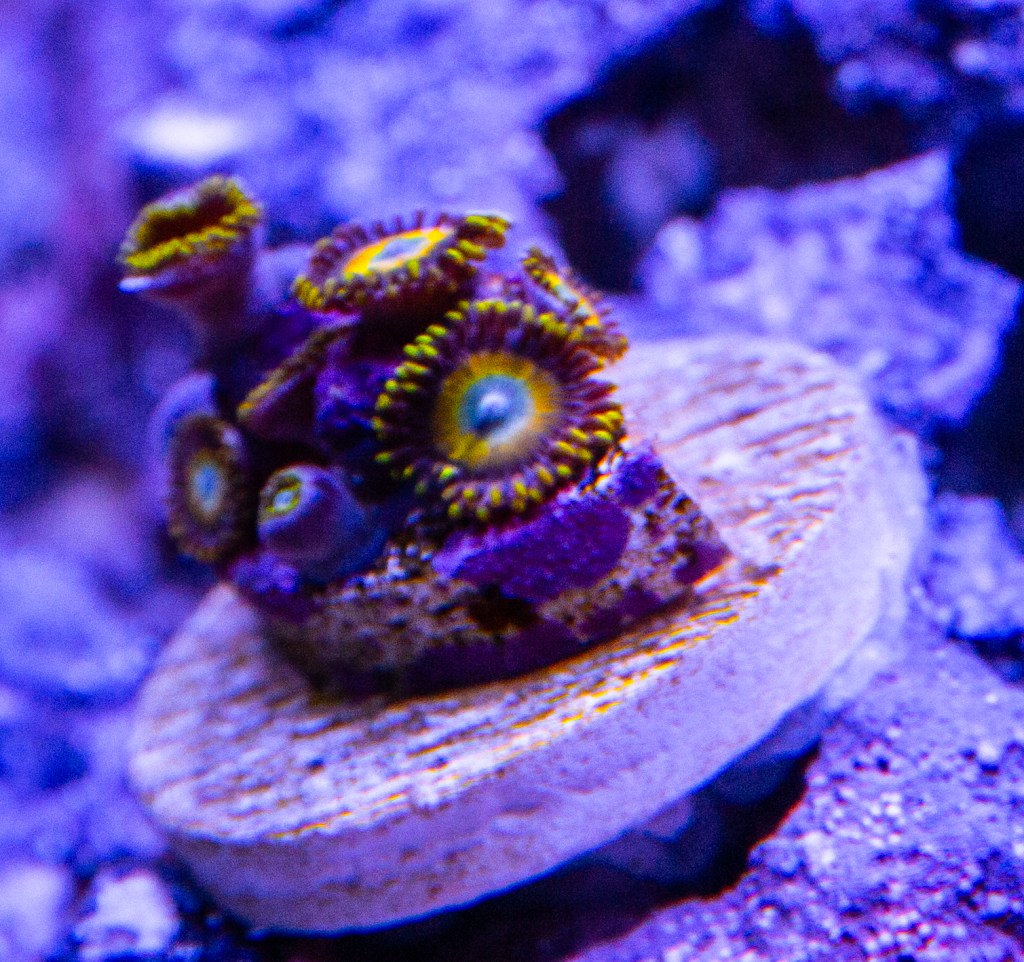
Is this what I see when I look at this zoa? No, not exactly. The yellow and purple have been saturated to be “brighter” or more exaggerated in my view, and I would have a hard time telling someone this is what they would actually get if the bought the frag and put it in their system. But is it dishonest or inaccurate? Or is it just helping us see the intricate details of the coral morph? (I will let the reader decide)
Aquarium Parameters
One of the interesting nuances about reef keeping is how much the little details matter. A couple of extra parts per million of phosphate or nitrate can be the difference between a beautiful tank and one over run with algae. The same goes for trace elements within your water to fuel and color up your coral, in particular for SPS corals such as Acropora. These trace elements also impact coral health overall (Balling et al. 1).
Mainstream brands such as RedSea, Aquaforest, and Korallen-Zucht have trace element products or programs. And then there are the perhaps less popular methods such as Reef Moonshiners or Triton that use ICP testing to determine missing trace elements for specific replenishment through dosing.
Even more common parameters such as nitrate and phosphate seem to have an impact on both growth rates and zooxanthellae populations which can impact health and coloration.
What does all this mean in relation to buying coral? We must assume that widely varying saltwater element composition will have an impact on coral growth, health, and coloration. The online vendor who is successfully aquaculturing a coral species, photographing and then selling it, may have water parameters different from your own. And when taking the coral frag from their system and placing it into yours, over time the coloration may change.
Solutions
So what can you do as a purchaser of coral then? My recommendations and personal methods can be summarized as such:
- Determine which vendors you personally trust when it comes to accurate photo representation of coral, and how these will look in your own system. I am hesitant to give specific vendor recommendations since the same problems such as lighting that impact how a coral will look, will impact my own recommendation as well. There are a few vendors though that help with offering photos in different lighting. Tidal Gardens has almost all coral presented in actinic and white lighting. Battle Corals shows many coral in both white and blue lighting. And Coral Euphora shows most coral in both blue and full spectrum as well. There are doubtless others that do this as well, but it is certainly a trend I wish all vendors did.
- Do your research on the vendor and what parameters they use. Do they list light settings used like World Wide Corals does? Do they list some of the water and light parameters like Coral Euphora does? And then how different are these parameters from your own?
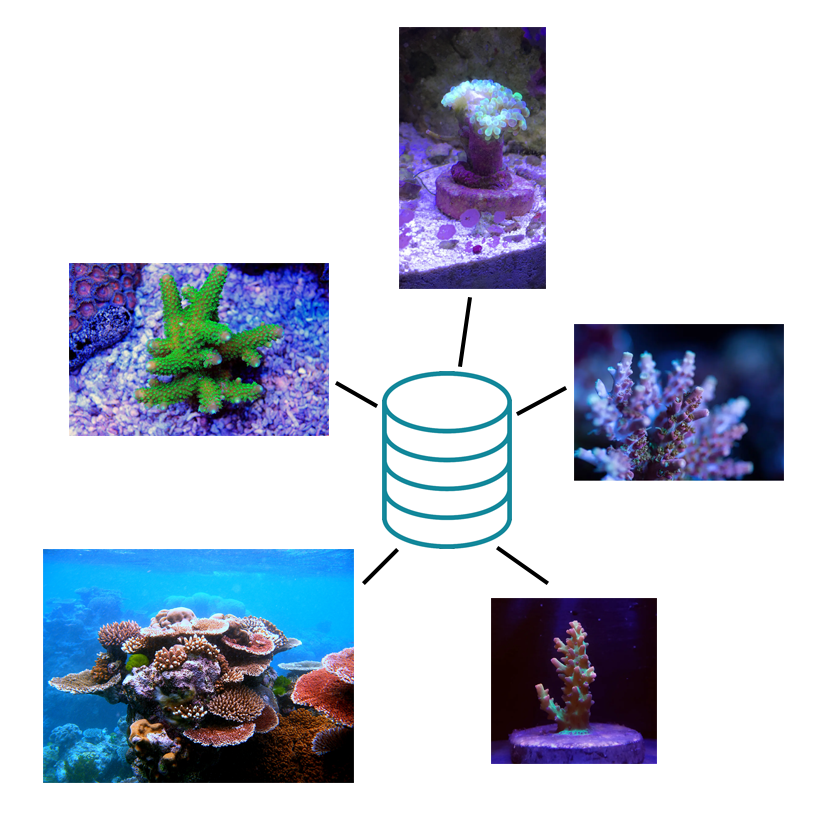
- Lookup what other hobbyists experience in their own tanks with the specific coral variant, taking into consideration again photography challenges and their own parameters. But you can at least see the ranges of variation across tanks doing this rather than solely relying on a single vendors photo. This is also the intent of my own Coral Database, to show what I see in my own tank vs the vendor representation.
- Live Sales seem to be all the rage on sites such as Reef2Reef, or auction sites. These take advantage to a certain extent of our impulses for a “good deal” and the avoidance of a missed opportunity. If you do not act fast, you will miss the deal! This means we may quickly purchase a frag without doing any of this research and end up disappointed. While I myself have participated in these sales, my current strategy is to only purchase at one with a set list of coral I am interested in. If I know that Vendor X has a sale coming up, I look at what stock coral they typically sell. And then if this specific frag comes up during the sale I grab it.
- Go to a coral swap or LFS and see the coral in person! And make sure you ask about lighting when there to see how different it may be from your own.
References
1 – Ben-Zvi, O., Lindemann, Y., Eyal, G. et al. Coral fluorescence: a prey-lure in deep habitats. Commun Biol 5, 537 (2022). https://doi.org/10.1038/s42003-022-03460-3
2 – “Exploring Our Fluid Earth.” Light in the Ocean | Manoa.Hawaii.Edu/ExploringOurFluidEarth, University of Hawai‘i, https://manoa.hawaii.edu/exploringourfluidearth/physical/ocean-depths/light-ocean. Accessed 28 Nov. 2023.
3 – Balling, Hans-Werner & Janse, Max & Sondervan, Piet. (2008). Trace elements, functions, sinks and replenishment in reef aquaria. https://www.researchgate.net/publication/274248491_Trace_elements_functions_sinks_and_replenishment_in_reef_aquaria

 AstroReefer
Leave a comment